.png)

In loving memory of
.png)
Elizabeth Carter
12 April 1941
.png)
3 June 2021
A life remembered quietly
In silence, memory speaks

"I want to be remembered with a smile.
Remember me with laughter, and smile when you remember me."

Biography
_edited.png)
Elizabeth Carter
Born on 12 April 1941 in Bristol, United Kingdom
Passed away on 3 June 2021 in Bristol
Daughter of Thomas Carter, a farmer, and Margaret Carter, a homemaker, Elizabeth grew up in a modest household where work and responsibility were not ideas to be explained, but realities to be lived every day.
She was the second of three children, raised alongside her brother William and her sister Sarah, with whom she maintained a strong and lasting bond throughout her life — a relationship built on presence, affection, and the habit of sharing every important moment together.
In 1966, she married George Carter, a produce trader.
From their union came two children: Emily and Daniel Carter.
Throughout her life, Elizabeth worked between the land and local markets, building not only a livelihood, but a reputation founded on reliability, dedication, and quiet integrity.
Her Life
A simple upbringing, grounded in reality
Elizabeth was born and raised in a Bristol that was very different from the one we know today — a place where life was shaped by work, by the seasons, and by the rhythms of family life.
Her childhood was peaceful, but never idle. It was not defined by comfort or excess, but by real experiences: the land, the passing of seasons, the work of her parents, and the closeness of family life.
From a very young age, she showed a natural curiosity — a tendency to observe, to understand, and to become involved.
She was never still for long.
There was always something to explore, something to learn.
Nature was not something to admire from a distance.
It was something to belong to.
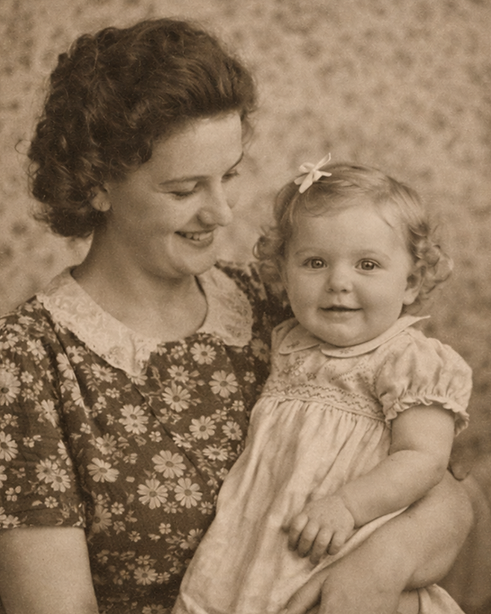

Her bond with her father
Her father, Thomas, played a central role in her upbringing.
Elizabeth followed him everywhere — not out of obligation, but out of instinct.
She watched him work the fields, studied his gestures, and tried to take part even when she was still too young to be of real help.
When he planted seeds, she moved closer to do the same.
When he harvested, she wanted to join in.
It was not play.
It was her first encounter with responsibility, with effort, and with a sense of belonging.
In that quiet, wordless relationship, she developed the foundations of who she would become: practical, grounded, and deeply connected to the value of work.

1941 Elizabeth grew up in a modest household

1942 Elizabeth was the second of three children.
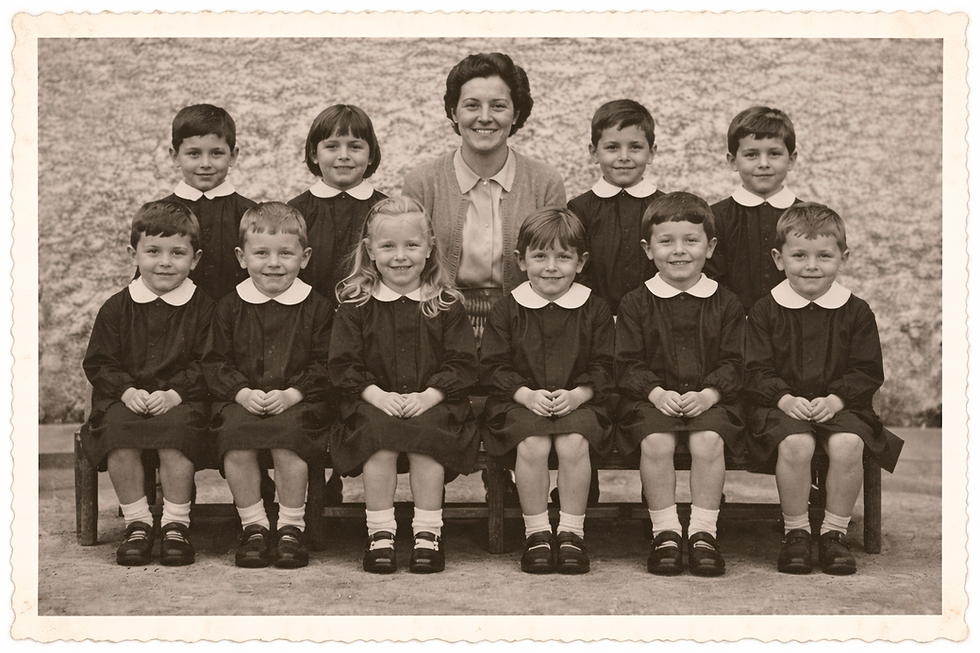
1947 Elizabeth's class
The family as
a foundation
Her mother, Margaret, represented a different kind of presence — steady, organised, and constant.
She cared for the home and the children with complete dedication, embodying a model of care and quiet strength.
Within this balance — between her father’s labour and her mother’s care — Elizabeth grew up with a clear understanding:
everyone has a role, and every role matters.
Life Choices
Leaving school
Towards the end of the 1950s, Elizabeth faced a reality that left little room for alternatives.
She had begun her education, like many young people of her time, but her family could not afford to support her studies any further.
Life in those years was demanding, money was scarce, and every member of the household was expected to contribute.
She left school not because she lacked interest,
but because she had no choice.
It was a decision shaped by necessity,
accepted with a maturity beyond her years.
She did not complain.
She did not resist.
She simply stepped forward into what life required of her.

Entering the world of work
After leaving school, Elizabeth moved fully into working life.
It was not a gradual transition.
It was immediate.
Her days began before dawn and followed the rhythm of the land. The work was physical, constant, and often exhausting.
There were no modern tools to ease the burden — everything required presence, strength, and endurance.
She took part in every stage:
planting, tending the crops, harvesting, preparing produce for sale.
And then came the markets.
Long days extended into long evenings, surrounded by people, transactions, and the effort of turning labour into livelihood.

1957 She had begun her education, like many young people of her time

1951 Elizabeth faced a reality that left little room for alternatives.

1958 Elizabeth learned not to expect ease.
The making of her character
These were the years that shaped her completely.
She learned not to expect ease.
She learned not to look for excuses.
She learned to do what needed to be done.
Sacrifice stopped being something exceptional. It became part of everyday life.
And from that, a quiet strength emerged — one that did not need to be spoken about, because it could be seen in everything she did.

She kept these thoughts to herself
Meeting George


An encounter in everyday life
Elizabeth met George within the context of work.
It was not a romanticised encounter. It happened in the middle of ordinary days — among markets, routines, and the steady demands of life.
They saw each other.
They recognised something familiar.

What brought them together
It was not words that drew them closer.
It was a shared way of facing life:
practical, resilient, grounded.
Both were used to hard work.
Both believed in building something real.
They were not looking for something fleeting.
They were looking for something lasting.

The beginning of their relationship
Their relationship grew without the need for grand gestures.
It was built on presence, on mutual respect, on the quiet understanding that comes from sharing the same path.
Not an extraordinary love story.
But a deeply real one.
Some people arrive quietly.
And quietly change everything
Marriage and building a life
The wedding
In 1966, Elizabeth and George were married in a church in Bristol.
The ceremony was simple, in keeping with who they were. There was no excess, but there was meaning — family, community, and the presence of those who had known them for years.
It was not an ending.
It was the beginning of something solid.
Building a life together
After their marriage, they began to build their life side by side.
There was no real division between work and personal life. Everything was interconnected.
The home was not separate from their work.
Work was part of daily life.
They supported each other without needing to say it.


Life in the markets
They worked together selling fruit and vegetables in local markets and surrounding areas.
Early mornings, preparation, travel, conversations with customers — it was a routine built on effort and continuity.
Elizabeth was never in the background.
She managed, organised, interacted.
Over time, she became a familiar and trusted presence — someone people recognised and relied on.

Growing older, side by side
Family
Life

The birth of
Emily and Daniel
In the early 1970s, Elizabeth and George welcomed their two children, Emily and Daniel.
Their arrival did not change the direction of Elizabeth’s life — it deepened it.
Life became fuller, more demanding, more layered. But it also gained a new centre.
The names they chose were simple, without the need to stand out or follow trends. Names that reflected their way of being: grounded, honest, without excess.
Because for Elizabeth, what mattered was never appearance.
It was who her children would become.
Motherhood in its truest form
For Elizabeth, being a mother was not a role to step into.
It was a way of living.
She did not separate her responsibilities — she carried them all together.
Her days were filled with:
work in the fields and markets,
running the household, caring for her children.
There was no clear boundary between one and the other.
And yet, despite the weight of it all, her children did not grow up in a home defined by struggle.
They grew up in a home defined by stability.
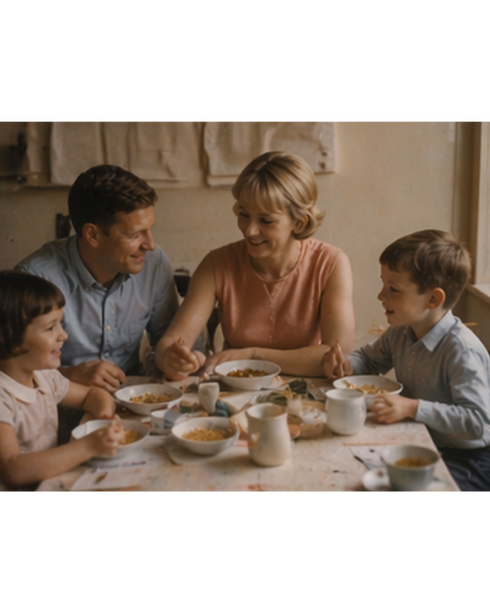

Her way of loving
Elizabeth did not express love through words or grand gestures.
Her love was constant, practical, and present.
It was there in the meals she prepared every day.
In the care she put into even the smallest tasks.
In her ability to notice what was needed before anyone asked.
Even when she was tired, she remained attentive.
Her love was not something she spoke about.
It was something she did.

The values
she passed on
Her children did not learn through instruction.
They learned through observation.
They saw her wake early, regardless of fatigue.
They saw her work without complaint.
They saw the respect she showed towards others, towards her work, towards life itself.
Over time, they understood that these were not habits.
They were principles.
And those principles became part of who they were.
Not something they were told to remember —
something they grew into.
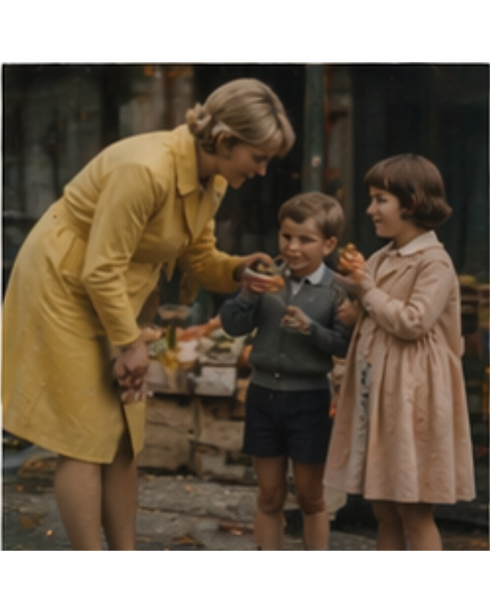
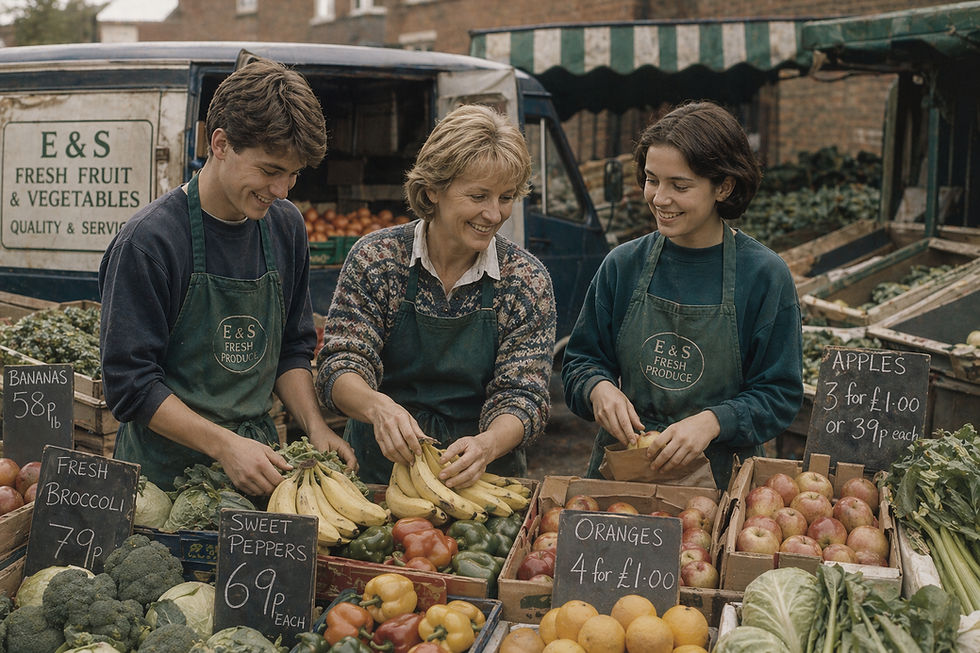
Brighton

1987 For many years they traded at Brighton Open Market, serving local families across Brighton and nearby towns.
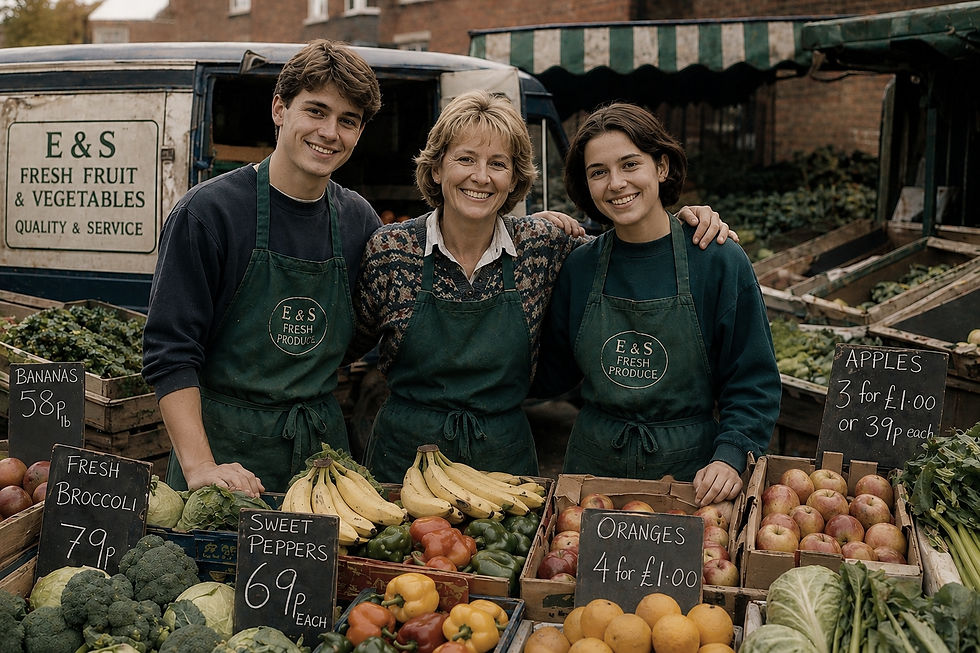
November 1987
Her Way Of Being

A presence that did not need to impose itself
As the years passed, Elizabeth did not change in essence.
She did not become harder, nor more distant.
She remained consistent.
She was not a woman who sought attention.
She did not need to raise her voice to be heard.
And yet, when she was present, she was felt.
There was a quiet steadiness about her — something that made people feel at ease without quite knowing why.


The way she communicated
Elizabeth spoke little.
Not because she had nothing to say, but because she did not feel the need to fill silence unnecessarily.
She listened.
She observed.
And when she did speak, her words carried weight.
Her voice was calm, measured, never harsh.
And her laughter — unmistakable.
Not loud, not forced.
Simply genuine.
It was that laughter, more than anything, that stayed with people.
Facing life without drama
Elizabeth did not avoid difficulty.
She faced it.
She did not turn challenges into something to be talked about endlessly.
She dealt with them.
With clarity.
With responsibility.
Without unnecessary emotion.
Her belief was simple:
problems are not solved by speaking about them,
but by facing them.
And this way of thinking left a deep impression on everyone around her.

Even Empty, It Still Felt Like Her
Her voice, softly remembered
Passions and Daily Life
Cooking as an
act of care
For Elizabeth, cooking was never just a task.
It was a way of caring for others.
She prepared meals using what she had grown herself. She knew each ingredient, each flavour, each season.
Her cooking was not elaborate.
It was honest.
And because of that, it stayed with people.


Her place:
the garden
Her favourite place never changed.
The garden.
The vegetable patch.
They were not simply spaces to maintain.
They were where she found balance.
Where time moved at the right pace.
Where effort turned into something tangible.
For Elizabeth, tending the land was never just work.
It was a form of care.
Knitting and quiet dedication
She spent time knitting.
Not to pass the time, but to create something meaningful.
Sweaters for her grandchildren.
Garments made slowly, patiently.
Every stitch carried intention.
It was her way of being present, even when she was not physically there.
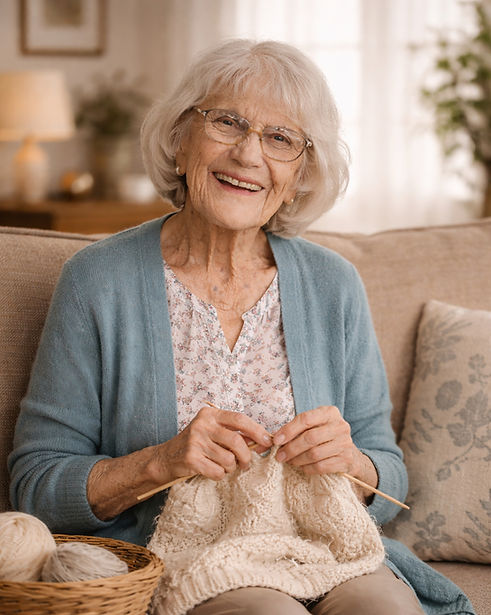

Her hands were always teaching, even in the smallest moments

Joy came naturally whenever family gathered around her

Being held by her felt like being home
Family
and Belonging
The arrival
of grandchildren
As the years went on, the family grew.
Grandchildren arrived, and Elizabeth stepped naturally into this new phase of her life.
She did not change who she was.
She extended it.

Her role within the family
She became a central figure — not in a dominant way, but as a point of reference.
Her home remained a place people returned to.
A place that felt stable, familiar, constant.

The moments that mattered most
What brought her the most happiness were not extraordinary occasions.
They were simple, shared moments:
Christmas
Easter
summer gatherings.
Moments when the whole family was together.
It did not matter whether the children were young or grown.
What mattered was presence.
Her bond with her siblings
She never lost her connection with William and Sarah.
Even as each built their own family, the bond remained strong.
They continued to share celebrations, milestones, and time together.
It was not a connection maintained out of habit.
It was one that was chosen, again and again.
Their closeness was woven into daily life

Her Final Years

A gradual slowing down
In her later years, the pace of life naturally slowed.
Work became less central.
But who she was did not change.
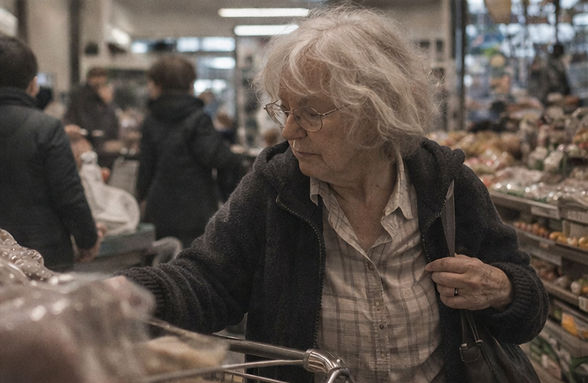
Continuing to give
Even when she began to need care herself, Elizabeth did not shift her focus inward.
She continued to think of her children.
To worry about them.
To care.
Her instinct remained the same.
To give.

Facing vulnerability with dignity
She did not treat vulnerability as something to display.
She carried it with quiet dignity.
Without fear.
Without exaggeration.
In the same way she had lived her entire life.
The end of her journey
Elizabeth passed away on 3 June 2021, in Bristol.
Not suddenly, but as a presence that slowly withdrew.
Leaving behind everything she had built.

Her Legacy
Elizabeth did not leave behind something that can be held.
She left something that can be recognised.
In the way her family faces life.
In the way they remain connected.
In the values that continue to live through them.
She left an example.
Quiet.
Consistent.
Enduring.

Quietly Watching the Morning

Love That Never Needed Words

Love in Small Gestures

Tributes & Memories
_edited.png)
We welcome family and friends to share a treasured memory, a gentle tribute, or words of heartfelt remembrance in honour of a life cherished beyond measure and remembered with timeless love.


Leave a Tribute
With Love & Remembrance
.png)
Arthur Bennett
9 mag 2026
Thinking of you with deepest sympathy and wishing you strength, comfort, and peace.

Eleanor Hayes
9 mag 2026
Forever remembered, forever loved.
May their memory remain a light in the hearts of all who knew them.
.png)
September 2019
Margaret Whitmore
9 mag 2026
With heartfelt sympathy during this difficult time.
May loving memories bring comfort and peace in the days ahead.
Shared Photo Memories


A beautiful soul never truly departs.
Its grace, love, and presence remain forever in the hearts it touched.
